Why most teams refactor correctly and still lose
Teams invest seriously in refactoring and still lose speed. The surprise isn't the cost. It's that with the same effort, timing alone can nearly double the return.
Teams ship faster every quarter, yet delivery keeps slowing. The problem isn't process or talent. It's technical debt silently draining change capacity until agility collapses.
Companies cutting engineers for AI efficiency will be forced to rehire within months. The ones with foresight are investing in capability, not cutting headcount.
The 2025 DORA report makes one thing clear: AI doesn’t just speed up code, it speeds up the system around it. Engineers who understand that system grow in value. Engineers who rely on experience alone see it calcify instead of compound.
AI isn't replacing engineers but, it's making narrow specialists much easier to replace while multi-dimensional engineers dominate in AI-augmented teams.
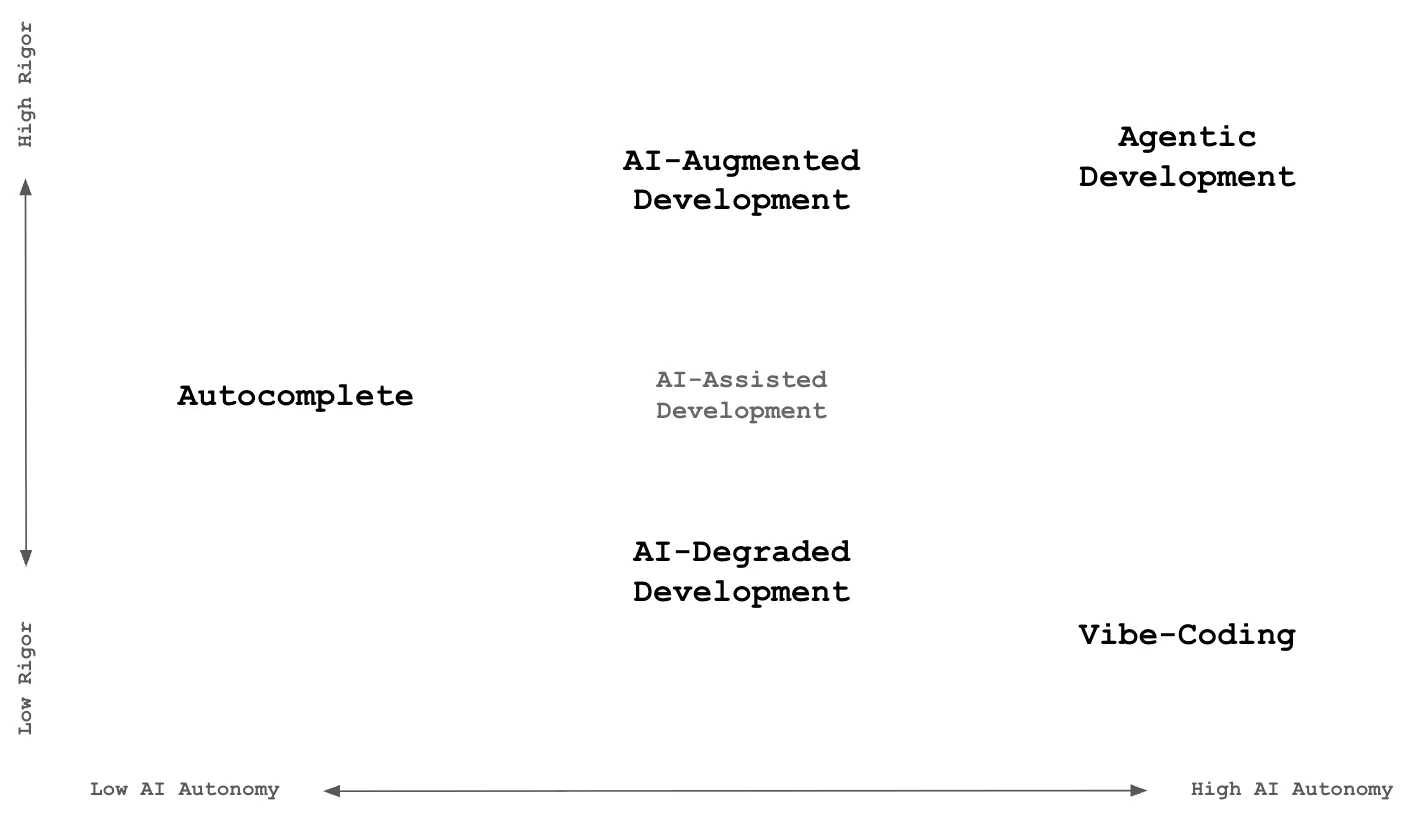
Everyone is calling AI code generation "vibe coding"—from harmless autocomplete to security nightmares. This confusion leads to wrong bets on tools and policies. Here's the matrix that separates hype from reality.
95% of enterprise GenAI pilots deliver zero financial impact. The successful 5% aren't using better AI—they're organized differently.
My wife's Instagram warning about AI making us dumber led me to MIT research showing ChatGPT users lose cognitive abilities. The data is stark, but the solution isn't abandoning AI, it's using it better.